
The Woolcock Institute of Medical Research
Memories and a legacy of hope
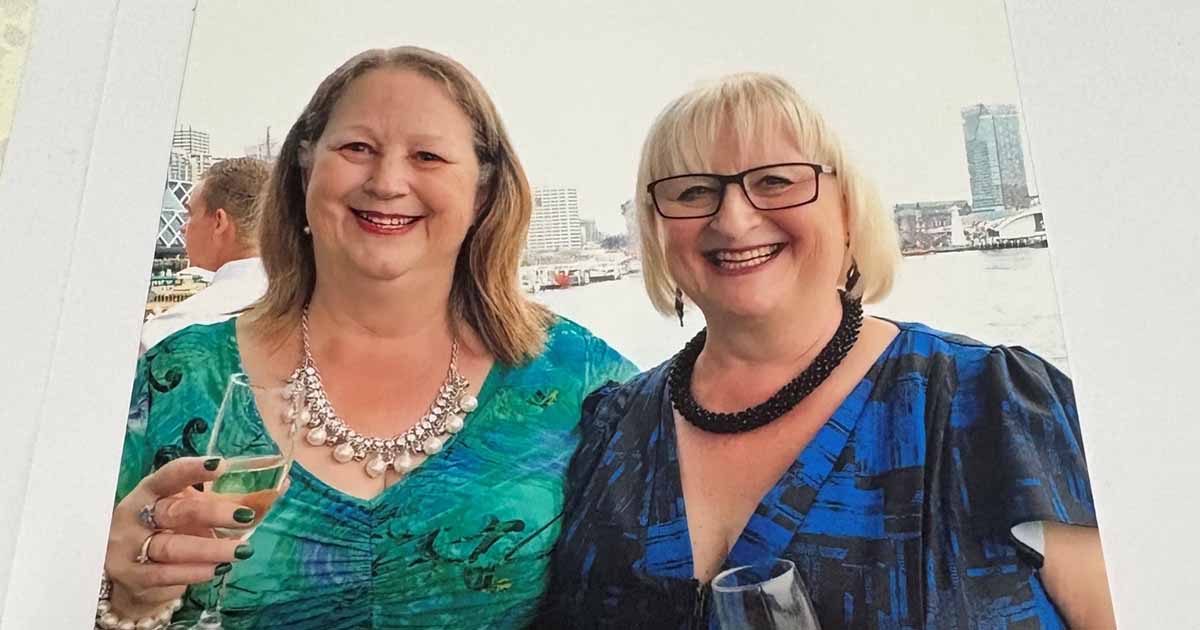
Sue MacGillycuddy was a woman with a strong personality, a generous heart and a deep appreciation for the people in her life. Her sister, Louise Semmler, remembers Sue as someone with a strong sense of herself. She took pride in her appearance and the way she lived her life, cared deeply about the people around her, was kind, generous and loyal.
“She was the best friend that anyone could ever have,” Louise says.
Sue had a large circle of friends and loved the things that brought people together: sharing meals, enjoying good food and wine, and spending time together.
Alongside this full and connected life, Sue lived with significant respiratory disease for many years.
A patient of Professor Greg King, Research Leader of the Woolcock Institute of Medical Research’s Airway Physiology and Imaging group, Sue was part of the Woolcock community for more than 25 years. She lived with chronic asthma, bronchiectasis and tracheobronchomalacia — a condition where the airway can collapse, making breathing more difficult.
Sue’s respiratory illness was a long-term challenge, but it did not define her. She continued to live a full life, maintaining friendships and connections despite the limitations her health sometimes placed on her.
Want to stay up to date with the Woolcock's research on sleep and respiratory conditions?
Sign up to our quarterly newsletter
Respiratory disease affects more than the person living with it. It also affects the family members and friends who share the journey and see firsthand the challenges that chronic illness can bring.
For Louise, seeing Sue manage the impact of respiratory disease over many years reinforced the importance of research that can lead to better treatments, technologies and options for people living with these conditions.
Sue died recently at the age of 68 after a diagnosis of pancreatic cancer. While respiratory disease was not the cause of her death, her own experiences gave her an understanding of the challenges faced by people living with chronic respiratory conditions.
Before she died, Sue chose to leave a bequest to the Woolcock Institute of Medical Research.
Louise remembers Sue saying that she wanted her gift to support research.
“She’d always said to me, ‘I want to make a bequest to the Woolcock and I just want it to be used for research,’” Louise said.
Sue’s gift will support the Woolcock’s ongoing work to better understand respiratory disease and pursue discoveries that may improve outcomes for patients in the future.
“I’m grateful for any research into respiratory diseases,” Louise said. “Anything that can be developed to improve the quality of life for patients with any respiratory illnesses is such a blessing.”
Research is about looking beyond the treatments available today and asking whether there could be a better way. Bequests provide vital support that allows researchers to explore new ideas, investigate unanswered questions and pursue discoveries that may not otherwise receive funding.
Sue’s bequest is a lasting connection to the work of the Woolcock and to the search for better solutions for people living with respiratory disease.
Just as Sue made an impact on the people around her through her generosity and the connections she built throughout her life, her contribution will help support a future where more people living with respiratory disease — and those who care about them — can look forward to better outcomes.
Find out more
Share online
Donate
We are committed to understanding and eradicating these conditions. If you would like to support our research please click the donate button.

Subscribe
Sign up with your email address to receive quarterly newsletter updates, including the latest medical findings and breakthroughs in respiratory and sleep research.
We Need Volunteers for our research











PRIVACY: The Woolcock Institute of Medical Research recognises the importance of your personal information and privacy. We will use your provided details only to contact you about information we believe will be of interest to you. Read our full Privacy Policy.
Woolcock Institute of Medical Research is a not-for-profit charity. Donations of more than $2 are tax deductible. Copyright © 2026. ABN: 88 002 198 905