
The Woolcock Institute of Medical Research
When lung repair goes wrong
Dr Yanan Ying is conducting research into progressive pulmonary fibrosis with the Woolcock’s Respiratory Cellular and Molecular Biology group. Here, she explains the disease and why it became her focus.
During my years working in respiratory medicine in China, there was one group of patients who could be considered to have suffered even more than people with lung cancer — those living with progressive pulmonary fibrosis. Many of them experienced a relentless decline in their quality of life and, despite every effort, we often had very limited treatment options.
I encountered a common phenomenon in the clinic. Some patients become frightened the moment they read the words "little fibrotic foci" on a chest CT report. They Google it, assume they have an incurable lung disease and imagine the worst. Others react in exactly the opposite way. They dismiss phrases such as "interstitial changes" as harmless signs of ageing or smoking and carry on with their lives without giving them another thought.
Months or even years later, they notice a persistent dry cough. Climbing stairs becomes more difficult. Walking the same distance leaves them short of breath. By then, the disease may have been quietly progressing for a long time. For patients who eventually receive a diagnosis of progressive pulmonary fibrosis, the journey can be devastating. Many require repeated hospital admissions, with each admission reflecting a further decline in lung function. They may survive only a few months despite intensive medical care.
These experiences sparked my deep interest in pulmonary fibrosis and led me into research. Fibrosis is the body’s normal wound-healing response gone awry. Why do some lungs successfully repair themselves after injury, while others seem to lose their "brakes”, leading to relentless and irreversible scarring? Answering this question has become one of the greatest challenges in respiratory medicine.
WHAT CAUSES IT?
Pulmonary fibrosis is not a single disease but rather the outcome of many different forms of lung injury.
Some cases are classified as idiopathic pulmonary fibrosis (IPF), where no clear cause can be identified. Others develop following long-term exposure to occupational dusts such as coal dust, silica or asbestos, cigarette smoking, autoimmune diseases, certain medications, radiation therapy or repeated lung infections.
Although these conditions differ, they all share a common pathway: persistent injury followed by abnormal tissue repair that eventually results in irreversible scarring.
HOW IS IT DIAGNOSED?
Diagnosing pulmonary fibrosis requires more than a single scan.
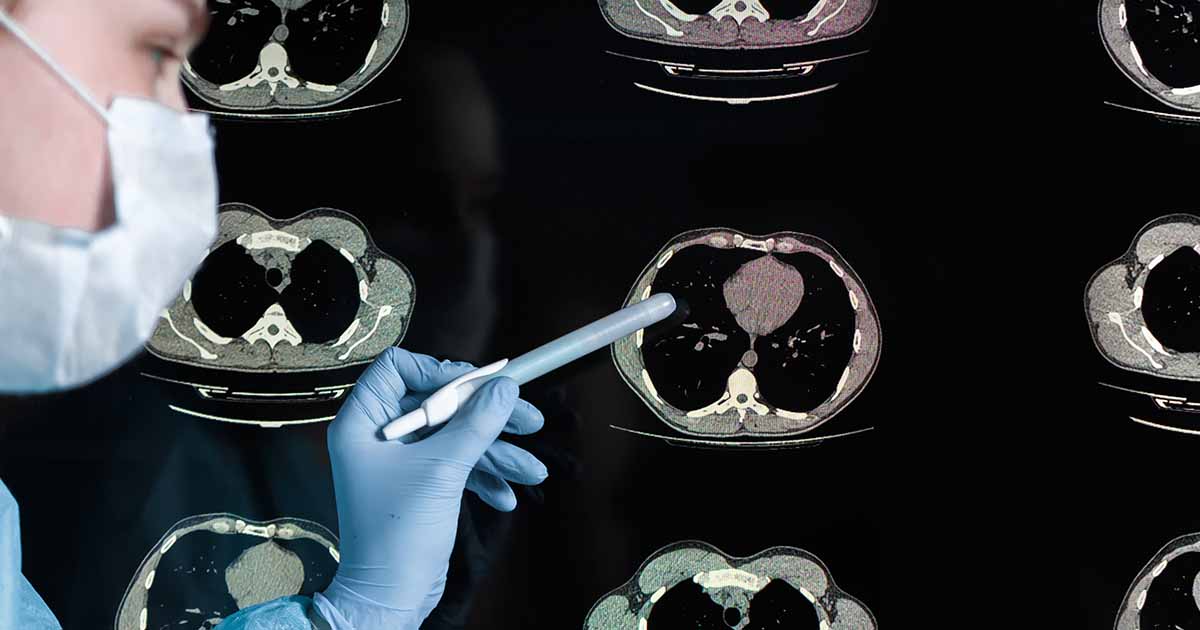
High-resolution computed tomography (HRCT) is one of the most important tools, allowing clinicians to identify characteristic patterns of fibrosis within the lungs. Pulmonary function tests measure how much lung capacity has been lost and how efficiently oxygen moves into the bloodstream. Blood tests, bronchoscopy, or even lung biopsy may sometimes be needed to identify the underlying cause.
Because many interstitial lung diseases can appear similar, diagnosis often involves a multidisciplinary discussion between respiratory physicians, radiologists, pathologists and rheumatologists.
Want to stay up to date with the Woolcock's research on sleep and respiratory conditions?
Sign up to our quarterly newsletter
CAN IT BE TREATED?
Current anti-fibrotic medications, including pirfenidone and nintedanib, can slow the progression of pulmonary fibrosis in many patients. Pirfenidone suppresses TGF-β-mediated profibrotic signalling and its downstream mediators, thereby reducing fibroblast activation and extracellular matrix deposition. In contrast, nintedanib is a multi-target tyrosine kinase inhibitor (TKI) that blocks several profibrotic growth factor receptors, ultimately attenuating TGF-β-driven fibrotic responses. However, more than a decade after the introduction of these two therapies, they remain effective at slowing disease progression rather than reversing established fibrosis or restoring normal lung function.
For patients with advanced disease, lung transplantation remains the only treatment capable of replacing severely damaged lungs. Unfortunately, donor shortages, surgical risks, and lifelong immunosuppression mean that transplantation is only suitable for a small proportion of patients.
THE FUTURE FOR PF?
Over the past decade, researchers have made tremendous progress in understanding the biology of pulmonary fibrosis. We now know that inflammatory signalling, immune responses and fibroblast activation all contribute to the development of fibrosis.
Around the world, scientists are investigating new approaches that move beyond simply slowing disease progression. Research into lung regeneration, stem cells, extracellular vesicles (EVs), and regenerative medicine aims to restore the lung's natural ability to heal rather than merely delaying further damage.
Every new discovery brings us a little closer to understanding why normal repair fails — and perhaps, one day, to helping damaged lungs repair themselves once again.
Find out more
Share online
Donate
We are committed to understanding and eradicating these conditions. If you would like to support our research please click the donate button.

Subscribe
Sign up with your email address to receive quarterly newsletter updates, including the latest medical findings and breakthroughs in respiratory and sleep research.
We Need Volunteers for our research











PRIVACY: The Woolcock Institute of Medical Research recognises the importance of your personal information and privacy. We will use your provided details only to contact you about information we believe will be of interest to you. Read our full Privacy Policy.
Woolcock Institute of Medical Research is a not-for-profit charity. Donations of more than $2 are tax deductible. Copyright © 2026. ABN: 88 002 198 905